

Industrial Facilities, Warehouses, Logistics Centres and Special Commercial Spaces: Interior Architecture and Fit-Out for Non-Standard Projects
A manufacturer relocating to a new facility in an Istanbul organised industrial zone needs the administrative building designed, fitted and operational before the production lines start. A logistics company opening a regional distribution hub needs a control room, driver welfare areas and management offices built into a shell structure. A port operator needs technical offices that can withstand humidity, heavy use and shift-pattern occupation. A pharmaceutical company needs laboratory-adjacent office space that meets specific air quality and cleanability standards.
These are all interior architecture and fit-out projects. They require design thinking, technical coordination and professional project management — exactly as a corporate office or a restaurant does. But most interior design firms in Istanbul do not work at this scale or in these environments.
Sonraki Architecture does. Since 2014 we have delivered projects across Turkey that go well beyond the categories of standard office and hospitality fit-out — including industrial administrative buildings, production facility relocations, technical office environments and specialist commercial spaces. Our 2016 project at Amper in Beysan Industrial Estate, where we managed both the complete interior fit-out and the operational relocation of the facility, is one reference point among several.
This guide explains the categories of non-standard commercial project that Sonraki delivers, what makes them technically different from conventional fit-outs, and how to approach them correctly from the start.
The Projects Most Fit-Out Firms Will Not Take On
There is a significant gap in the Istanbul construction market. On one side: residential interior designers who work beautifully but have no experience in industrial or logistics environments. On the other: large construction contractors who build at scale but have no design capability and no interest in a 500 m² administrative building.
Sonraki sits in the middle — a design and build practice with the technical capability to work in non-standard environments and the design standard to produce spaces that actually work for the people using them.
The project types we regularly deliver outside office and restaurant categories include:
Factory and production facility administrative buildings The administrative component of a manufacturing facility — reception, management offices, meeting rooms, staff welfare areas, canteen — is often the last thing planned and the first thing that affects client and visitor perception of the entire operation. Sonraki designs and builds these spaces with an understanding of how they sit within the production environment, not as an afterthought.
Warehouse and logistics centre offices and welfare areas Logistics facilities present specific interior challenges: large floor plates, high ceilings, temperature variation, heavy forklift traffic near building perimeters and a workforce that uses welfare areas intensively. Sonraki specifies materials and layouts that perform under these conditions — not showroom finishes that deteriorate within six months.
Port and marine facility offices Coastal and port environments are among the most demanding for interior finishes: salt air corrosion, high humidity, irregular occupancy and 24-hour operational patterns. Sonraki's material selection and specification approach accounts for these conditions from the first design stage.
Technical and laboratory-adjacent offices Pharmaceutical, medical device, chemical and food production facilities often require office and administrative areas that are contiguous with clean or controlled production zones. Ventilation zoning, surface cleanability, access control integration and contamination management all influence the interior specification. These are not standard office requirements — and they require a firm that understands both the regulatory context and the construction implications.
Production facility relocations Moving a business from one facility to another involves more than moving furniture. The sequence of decommissioning the old space, fitting out the new one and managing the transition window — often with a hard operational deadline — requires project management that goes well beyond interior design. Sonraki has managed facility relocations where the interior fit-out and the operational move were coordinated under a single programme.
Showrooms and product display environments Manufacturers, importers and distributors often need showroom environments that are neither conventional retail nor standard office — product display spaces with specific lighting requirements, demonstration areas, technical specification zones and client meeting facilities. These hybrid typologies require a designer who can think across categories.
What Makes These Projects Technically Different
Standard office fit-outs in managed commercial buildings operate within relatively predictable constraints: a known floor-to-ceiling height, standard MEP infrastructure, building management approval processes and a well-established contractor supply chain.
Non-standard commercial and industrial projects do not have these conveniences.
The building may be a steel frame shell with no MEP infrastructure at all. Everything — power, data, water, drainage, heating, ventilation — needs to be designed and installed from scratch, coordinated with the structural and mechanical engineers from day one.
Working around live operations is common. Factory fit-outs frequently happen while production continues. This requires phased programming, strict safety management and a contractor who understands industrial site protocols — not a residential renovation firm that has never worked on an operational production floor.
The user brief is operationally driven. In a factory or logistics environment, the interior design must serve the operational workflow, not the other way around. Understanding how people actually move through the facility, where supervision lines of sight are needed, how clean and dirty flows should be separated — these are operational questions that shape every design decision.
Material durability is non-negotiable. Industrial environments are hard on finishes. Flooring must withstand forklift traffic, cleaning chemicals and heavy footfall. Wall surfaces must resist impact and be cleanable. Lighting must perform under high ceiling conditions and shift-work hours. Sonraki specifies materials for performance first, appearance second — in that order.
Timelines are often fixed by operational deadlines. A company moving into a new facility on a specific date cannot wait for a contractor who falls behind schedule. Sonraki's project management approach — parallel processing of design, procurement and construction — is designed to deliver on fixed deadlines without last-minute compression.
Industrial Organised Zones (OSB) and Industrial Estates in Istanbul
Istanbul and its surrounding region contains a significant concentration of organised industrial zones (OSB) and industrial estates where Sonraki regularly delivers projects.
Key zones within reach include Tuzla Dericiler OSB, Beysan Sanayi Sitesi (where Sonraki's Amper AS project was located), İkitelli OSB, Hadımköy industrial zone, Gebze and Dilovası OSB and the Çerkezköy industrial corridor. Bursa's organised industrial zones are also within Sonraki's active project geography.
Companies operating in these zones — whether Turkish family businesses, international subsidiaries or joint ventures — have the same need: a reliable, design-capable firm that can fit out their administrative and welfare spaces to a standard that reflects the quality of their operation, without the disruption and uncertainty that poorly managed construction projects bring.
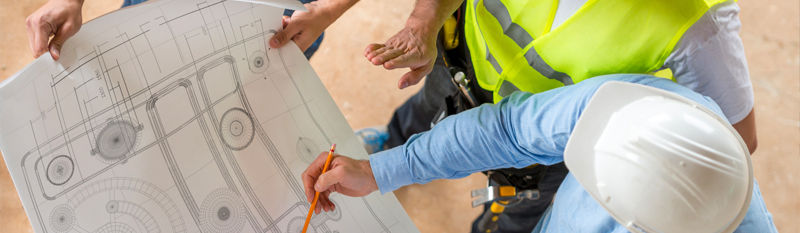
How a Non-Standard Commercial Project Works With Sonraki
Step 1 — Site and Brief Assessment We visit the facility, understand the operational context, assess the existing or proposed building shell and document the project brief. For industrial projects this includes understanding the production process, shift patterns, visitor frequency, welfare requirements and any regulatory constraints. More on our process: How Does the Fit-Out Process Work?
Step 2 — Spatial Planning and Technical Design Layout decisions are driven by the operational brief — not by aesthetic preference. MEP coordination, structural interface, fire and safety strategy are integrated from the start, not added later.
Step 3 — Specification and Material Selection Material selection is performance-led. We specify products that will withstand the specific conditions of your environment and maintain their performance over time. More on our production and supply capability: Interior Manufacturing and Supply
Step 4 — Construction Management Site management in industrial and logistics environments requires specific protocols: coordination with live operations, PPE compliance, clear demarcation of construction zones, regular progress reporting to operational management. Sonraki manages these requirements as standard.
Step 5 — Handover and Relocation Coordination Where required, Sonraki coordinates the transition from old to new facility — furniture installation, IT infrastructure relocation sequencing and operational move-in — to deliver a complete handover, not just a finished building. Our turnkey approach: Turnkey Interior Architecture
Cost Reference for Industrial and Non-Standard Commercial Projects
As a general reference for these project types in the Istanbul market:
-
Basic renovation and fit-out (standard industrial specification): approximately €700 – €900 / m²
-
Corporate-standard administrative buildings: approximately €1,000 – €1,300 / m²
-
High-specification management buildings and showrooms: €1,400 / m² and above
For shell and core industrial buildings — where all MEP infrastructure needs to be installed from scratch — costs sit toward the upper end of these ranges due to the extent of services work required.
Actual costs depend on building condition, MEP scope, specification level and operational constraints during construction. All budgets are confirmed following site assessment — not estimated from floor area alone.
For pricing detail: Interior Architectural Design and Implementation
Frequently Asked Questions
We are opening a new facility in an Istanbul OSB. Can Sonraki manage the administrative fit-out alongside our production line installation?
Yes — and coordinating these two workstreams is exactly the kind of project management challenge Sonraki is equipped for. We work with your production equipment suppliers to sequence the administrative fit-out so that it completes in line with your operational readiness date, not before or after.
We need to fit out our warehouse with offices and welfare areas but the building is a basic steel frame with no services at all. Is this within your scope?
Yes. Shell and core industrial buildings — with no electrical, plumbing or HVAC infrastructure — are a standard starting point for Sonraki. We coordinate all MEP design and installation as part of the fit-out programme. More on shell and core delivery: Shell & Core Fit-Out Services
Our factory is operational and we need to renovate the administrative areas without stopping production. How do you manage this?
Through phased programming and strict construction zone management. The works are planned in stages that isolate the construction area from the live production environment. Shift patterns and production schedules are factored into the programme from day one. This is not unusual for Sonraki — it is a standard requirement in industrial renovation projects.
We are a foreign company establishing a production subsidiary in Turkey. Can Sonraki communicate and manage the project in English?
Yes. Sonraki manages projects for international clients entirely in English — from first brief through to handover documentation. Our experience with international corporate clients means we understand the reporting structures, approval processes and communication standards that multinational companies expect.
How long does an industrial administrative fit-out typically take?
For a mid-size administrative building of 500–5000 m², design typically takes 4–8 weeks and construction 8–20 weeks depending on MEP scope and specification level. Projects where construction can proceed in parallel with live operations on phased programmes tend to run longer than single-phase projects in vacant buildings.
Who Is This Page For?
-
Manufacturing companies, logistics operators and industrial businesses planning new facility fit-outs or renovations in Istanbul , Marmara Region and Turkey
-
International companies establishing Turkish subsidiaries who need a bilingual, professionally structured design and build firm
-
Warehouse and logistics centre operators needing office, control room and welfare area fit-outs
-
Port, marine and coastal facility operators with specific environmental requirements
-
Companies managing facility relocations and needing integrated fit-out and move coordination
-
Any business with a commercial interior requirement that does not fit neatly into office or restaurant categories
This content is based on Sonraki Architecture's experience delivering interior design and fit-out projects across industrial, logistics and specialist commercial environments in Turkey since 2014.
Share Your Project
Let’s Work Together
Get in touch so we can start working together.